Google Gemini AI Now Integrated in Millions of Vehicles Globally
Google announced that Gemini AI is now integrated into millions of vehicles worldwide, providing advanced conversational capabilities and context-aware assistance directly in cars, signaling AI's integration into everyday hardware.

Aman Yadav
Staff Writer

AI Goes Mobile: Gemini Reaches Millions of Vehicles
Google announced that its Gemini AI system is now integrated into millions of vehicles worldwide, offering drivers advanced conversational capabilities directly through vehicle infotainment systems. The integration enables natural language voice commands, contextual assistance, real-time information access, and intelligent automation — all powered by Gemini.
This represents a major milestone for consumer AI. Rather than existing primarily in phones and web browsers, Gemini is now embedded in hardware that people use daily but that was previously limited to simpler voice assistants.
Capabilities in Vehicles
Natural Language Interaction: Drivers can converse with Gemini using natural language instead of rigid voice commands, enabling more intuitive interactions while driving.
Contextual Assistance: Gemini understands driving context — navigation routes, traffic conditions, nearby services — and proactively offers relevant suggestions.
Personalization: The system learns driver preferences and adapts responses and assistance over time.
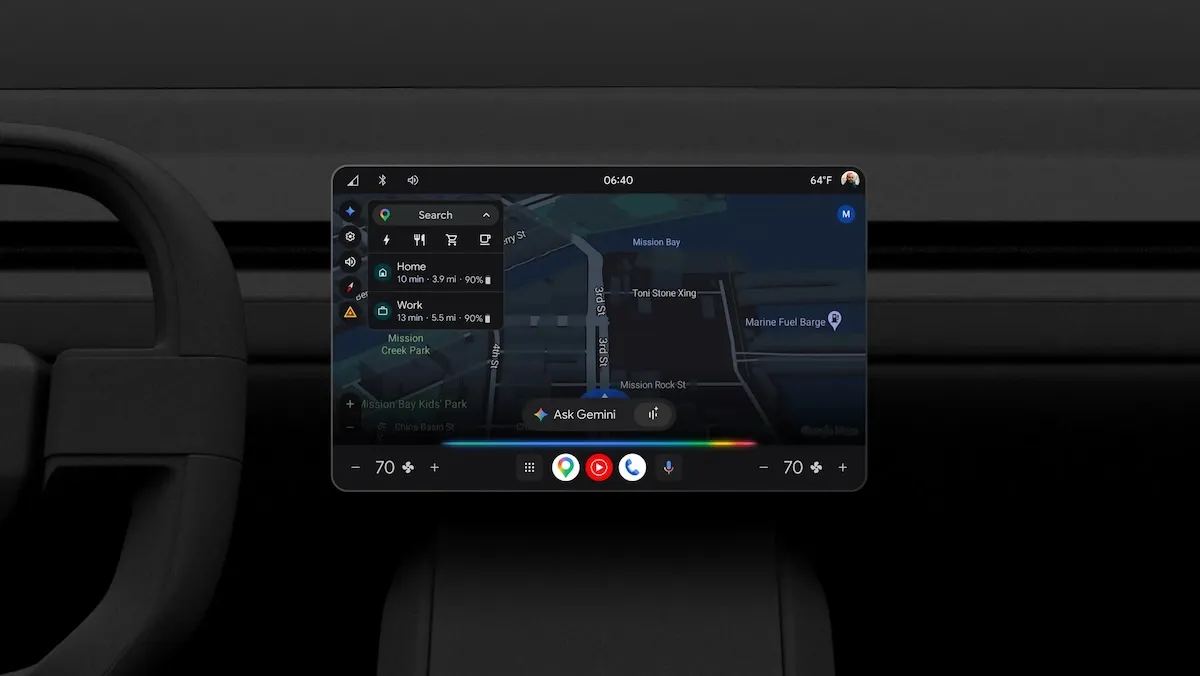
Integration with Services: Seamless access to maps, music, messaging, and third-party services through conversational commands.
Strategic Implications for Google
Vehicle integration is strategically important because it addresses a gap in AI distribution. While Google dominates mobile through Android, automotive infotainment has been fragmented. By embedding Gemini directly, Google secures mindshare in a device that consumers use daily but that competes less directly with mobile phones.
Automotive also generates valuable data — driving patterns, location history, preferences — that enhance Google's understanding of user behavior and advertising targeting capabilities. (This also raises privacy concerns that are addressed below.)

Privacy Concerns and Market Reception
Google's automotive expansion revives privacy concerns. Vehicles collect granular location data, driving patterns, and contextual information. Even with privacy protections, the concentration of this data raises questions about user awareness and consent.
For consumers, the convenience of AI-powered vehicles is clear. For regulators, ensuring transparency and user control remains a challenge, particularly in jurisdictions with strict privacy frameworks like Europe and emerging regulations in India.
About the Author

Aman Yadav
Covering the latest in AI, technology, and business — built for the modern Indian tech reader.
Related Stories

AI Is Using Your Job. But It's Not Taking It — Microsoft's Global Report Changes the Narrative

13 Balls. 8 Sixes. Joint-Fastest Fifty Ever. Meet Urvil Patel — CSK's New Weapon
