Google's Willow Chip Just Shattered a 30-Year Quantum Problem
For decades, adding more qubits made quantum computers worse. Google's Willow chip just proved that problem was solvable—and the implications are staggering.

Anny
Staff Writer
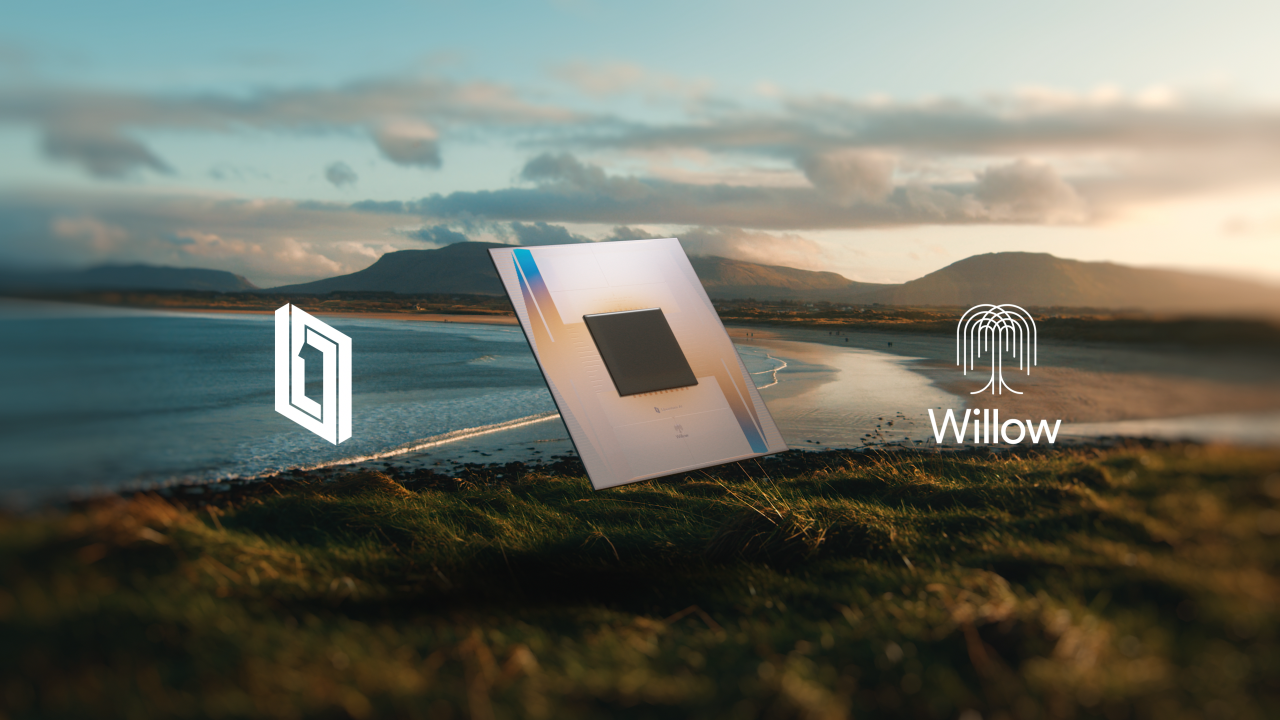
Quantum computing has long promised to solve impossible problems—Google's Willow chip finally delivers on that promise with a 13,000x speed advantage.
The Problem That Made Quantum Researchers Lose Sleep
Imagine building a bridge with a fundamental architectural flaw: every time you add another support column, the entire structure becomes weaker. For thirty years, quantum computing researchers faced exactly this problem. Adding more qubits—the quantum equivalent of transistors—increased computational noise and error rates to the point where the system became unusable.
This was the quantum computing paradox. The path to power seemed to lead to fragility. It felt like nature itself was saying: "There's a wall. You cannot go further."
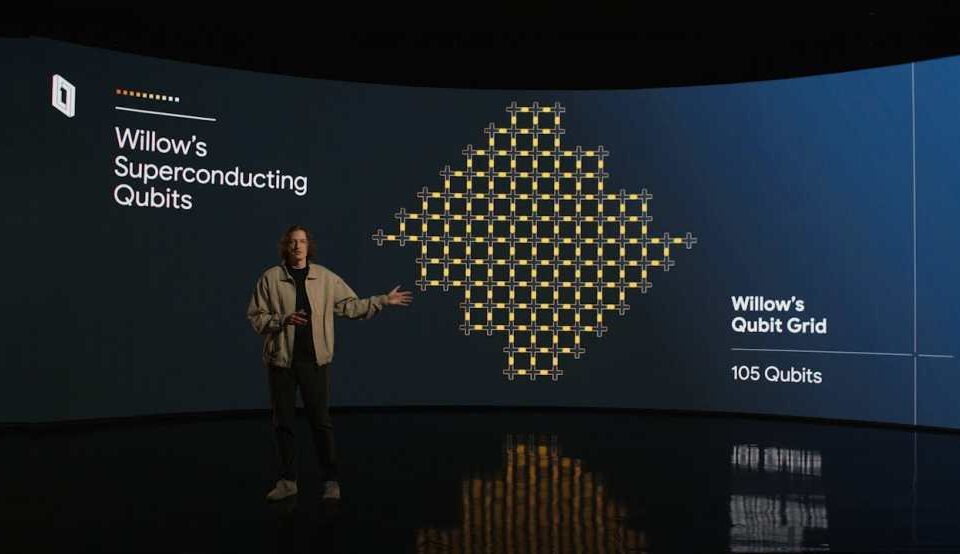
Google's new Willow chip doesn't just climb that wall. It demolishes it.
The Breakthrough That Changes Everything
The Quantum Echoes algorithm that powers Willow demonstrates the first-ever verifiable quantum advantage on an out-of-order time correlator problem—executing it 13,000 times faster than classical supercomputers. But the number itself is less important than what it represents: proof that error rates actually decrease as you scale. Adding more qubits makes the system MORE stable, not less.
This is the inflection point the industry has been waiting for since the 1990s.
Meanwhile, D-Wave announced scalable, on-chip cryogenic control for gate-model qubits—the first vendor in the industry to crack this particular technical challenge. MIT and Fermilab demonstrated ion trap systems with reduced thermal noise. Three different approaches. Three different vendors. All showing breakthroughs simultaneously. The industry has officially entered what researchers call the "fault-tolerant foundation era."
What This Means for You
If you work in India's pharmaceutical, materials science, or financial services sectors, quantum computing is no longer a "future technology." It's entering the commercial phase. The timeline is now measured in years, not decades. Organizations that understand quantum's applications—drug discovery, portfolio optimization, materials simulation—will have asymmetric advantages against competitors who ignore it.
Indian startups should be mapping use cases NOW: optimization problems in supply chain logistics, molecular simulation for materials science, financial modeling for capital markets. The window between "technology works in lab" and "competitors already have it deployed" is typically 3-5 years.
"The quantum barrier has been broken. What happens next is a race—and the fast movers will define entire industries."
The Power Grid Beneath the Breakthrough
Here's what matters more than Willow itself: Google is publishing this research. That signal—sharing breakthrough insights publicly—suggests Google has already moved past the pure research phase. They're confident enough in their quantum advantage that competitive advantage now comes from application, not secrecy.
That confidence matters. It means the quantum transition is real, imminent, and already beginning to reshape computational economics. The winners won't be the companies that build quantum computers. They'll be the companies that figure out what quantum computers are actually useful for—and deploy those applications first.
About the Author

Anny
Covering the latest in AI, technology, and business — built for the modern Indian tech reader.
Related Stories

AI Is Using Your Job. But It's Not Taking It — Microsoft's Global Report Changes the Narrative

13 Balls. 8 Sixes. Joint-Fastest Fifty Ever. Meet Urvil Patel — CSK's New Weapon
