"India Forgets Nothing. India Forgives Nothing." — One Year of Operation Sindoor
At exactly 1:05 AM on May 7, 2025, Indian missiles crossed the border. 25 minutes later, 9 terror camps in Pakistan were rubble. One year later, the Indian Army posted its anniversary video at exactly the same time — 1:05 AM. This is the complete story.

Aman Yadav
Staff Writer

The Indian Army marked Operation Sindoor's first anniversary by posting its commemorative video at exactly 1:05 AM — the precise moment the missiles flew one year ago.
At exactly 1:05 in the morning, on May 7, 2025, a group of Indian Air Force pilots got the clearance they had been preparing for. Rafale jets — repositioned from bases across India over the preceding days — began their approach. Their targets were nine terror camps across Pakistan and Pakistan-occupied Kashmir. Their mission had a name: Operation Sindoor.
Twenty-five minutes later, it was over. Nine camps destroyed. Over 100 terrorists killed. The headquarters of Jaish-e-Mohammed in Bahawalpur — one of Pakistan's most protected terror sanctuaries — reduced to rubble. Ten members of Maulana Masood Azhar's own family dead inside what he once thought was an untouchable stronghold.
India had just done something it had never done since the 1971 war: struck deep inside Pakistani territory. And it did it in the dark, in silence, with precision — and without asking anyone's permission.
One year later, on May 7, 2026 at 1:05 AM, the Indian Army posted its anniversary video on X — at exactly the same time the missiles flew. The message on screen read: "India forgets nothing. India forgives nothing."
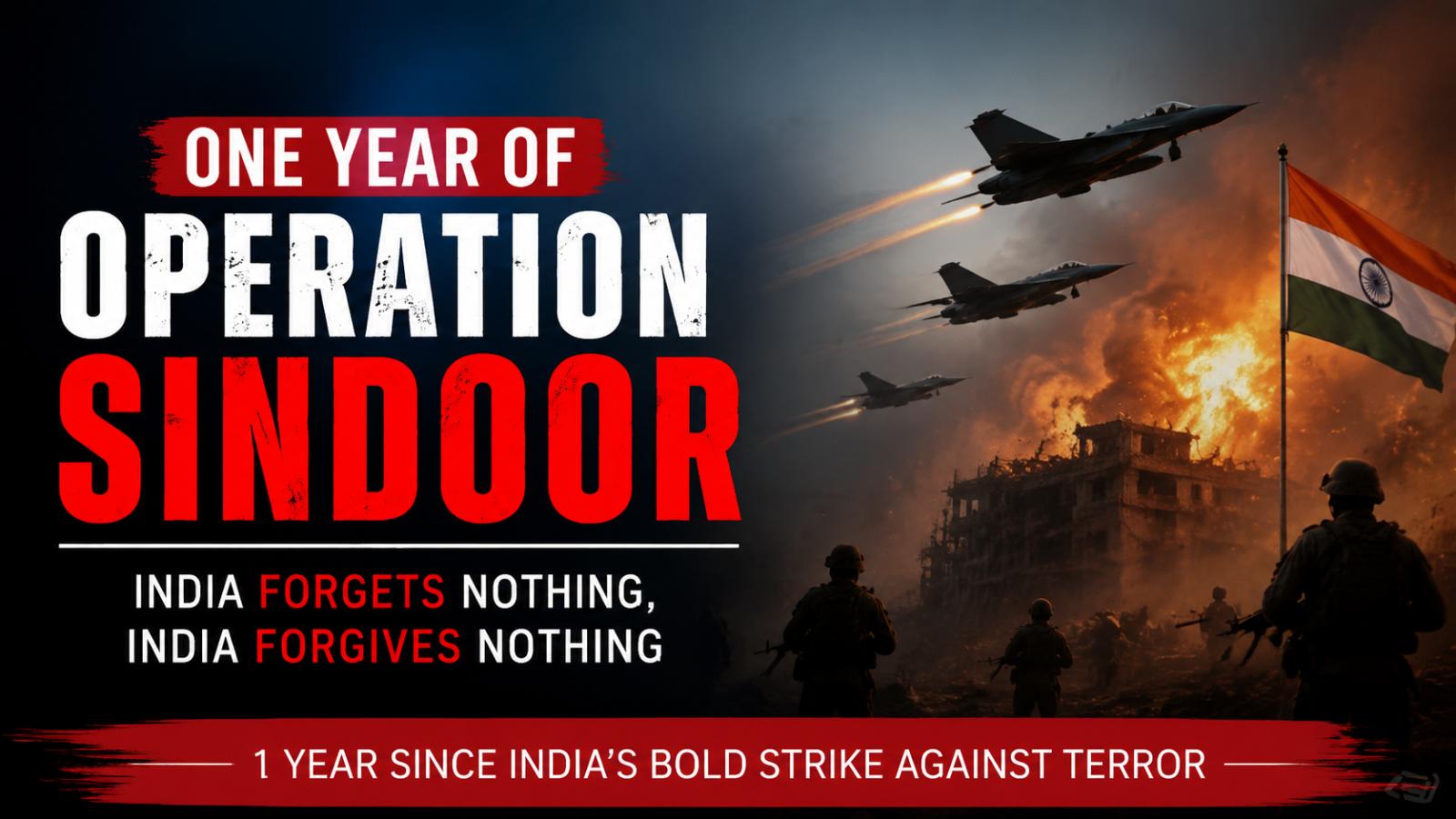
Indian Air Force Rafale jets were repositioned across multiple bases in the days before Operation Sindoor — at Hasimara, Gwalior, Ambala, Srinagar, and Nal — before flying precision strikes on the night of May 6-7, 2025.
It Began With a Picnic That Became a Massacre
To understand Operation Sindoor, you have to go back fifteen days before the missiles flew.
April 22, 2025. Baisaran Valley, Pahalgam, Jammu and Kashmir. One of the most beautiful meadows in Asia — a place so pristine that film crews came here to shoot Bollywood songs, where families from across India planned bucket-list vacations to see the mountains and the spring flowers.
Twenty-six tourists were picnicking, photographing, living. Militants emerged from the treeline. They asked the tourists their religion. Then they shot the Hindu men in front of their wives and children. Some of the women watched their husbands die and could not do anything. The children who were there will carry that afternoon for the rest of their lives.
India had survived terror attacks before. But something about Pahalgam broke differently. Maybe it was the deliberate targeting of civilians by religion. Maybe it was the beauty of the location — green meadows, snow-capped peaks, families on holiday. Maybe it was the accumulation of years of restraint that finally exhausted itself. Whatever it was, India's response this time would be different.
Fifteen Days of Waiting — And Watching
The fifteen days between April 22 and May 7 were among the most tense in recent Indian memory. India expelled Pakistani diplomats. Recalling its own diplomatic staff. Suspended the Indus Waters Treaty. Closed the border. The message was building — but no one knew how far India would go.
Pakistan's military was watching. It activated air defences. Dispersed aircraft. Placed armoured reserves on alert. The intelligence community on both sides went into overdrive. On April 29, four Indian Rafales reportedly flew toward Pakistani territory — and turned back after encountering electronic warfare jamming. Pakistan thought it had deterred India. It was wrong.
The IAF was repositioning. Twenty Rafales moved from Hasimara in the east to Gwalior, Ambala, Srinagar, and Nal in Rajasthan. India's transport fleet conducted more than 500 sorties. S-400 missile batteries were repositioned. India was not turning back. It was preparing.
25 Minutes That Rewrote South Asian History
At 1:05 AM on May 7, the operation began. What followed lasted exactly 25 minutes — but the preparation behind those 25 minutes had been building for years, and the consequences would reshape the region for decades.
Nine targets were hit simultaneously. The Jaish-e-Mohammed headquarters at Jamia Masjid Subhan Allah in Bahawalpur. The Lashkar-e-Taiba primary training facility at Muridke — one of the largest terror training infrastructure in the world. Seven more camps in PoK and Pakistani territory. India was surgical, precise, and deliberate. No Pakistani military installations were targeted. The message was directed exclusively at terror — nothing else.
Masood Azhar, the JeM chief and one of the world's most-wanted terrorists, acknowledged publicly that 10 members of his family and four close aides were killed when India struck his headquarters. He had lived untouchably in Pakistan for decades. On May 7, 2025, he learned that nowhere was truly untouchable anymore.
"India will track, identify, and punish every terrorist and their handler. Distance is no protection. Time is no protection. The reach of justice is longer than the memory of cowardice." — Indian Army's Operation Sindoor Anniversary Statement
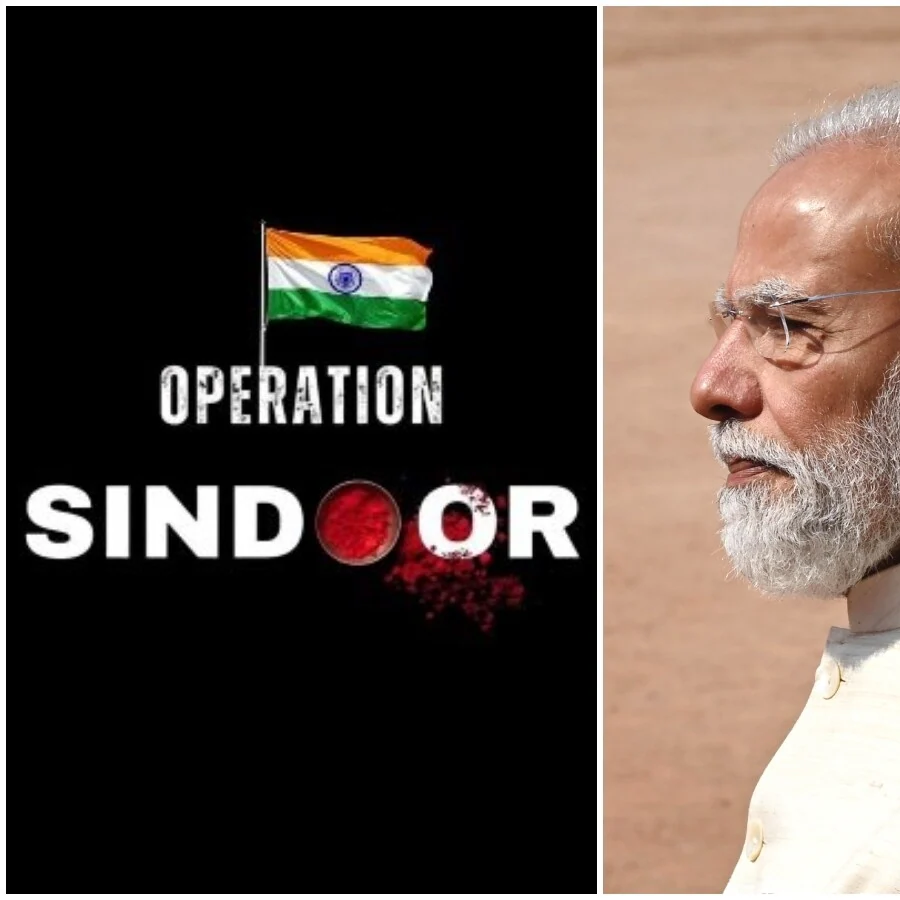
India observed the first anniversary of Operation Sindoor today — May 7, 2026 — with the army posting its commemorative video at exactly 1:05 AM, the moment the operation began one year ago.
What Pakistan Did Next — and How India Responded
Pakistan retaliated. It had no choice — domestically and politically, inaction was impossible. What followed was four of the most intense days of warfare between two nuclear powers in three decades. Drones flew in from Pakistan. Missiles were launched at Indian military installations. Pakistan's propaganda machine went into overdrive, claiming it had shot down multiple Indian Rafales.
But India's Integrated Air Command and Control System — the IACCS developed by Bharat Electronics Limited — proved its worth. Every Pakistani drone was tracked. Every missile was engaged. Pakistani propaganda claimed it neutralised 77 Indian drones. India claimed it destroyed Pakistani airbases and radar installations. The information war was as fierce as the military one.
By May 10, the US was working frantically behind the scenes. Vice President JD Vance, Secretary of State Rubio, and ultimately Donald Trump himself made calls. Pakistan requested a ceasefire. On May 10, the Directors General of Military Operations of both armies spoke directly — and agreed to stop. India insisted the ceasefire was entirely bilateral. Trump claimed credit loudly. It became — and remains — a sore point.
One Year Later: What Changed, What Didn't
India's security doctrine has fundamentally shifted. Before Sindoor, cross-border terrorism was met with surgical strikes inside PoK, diplomatic protests, and strategic patience. After Sindoor, the threshold has moved permanently: terror attacks traced to Pakistani groups will be met with direct strikes on Pakistani territory. No warning. No UN permission. No American approval needed.
The IAF has spent the year since upgrading its IACCS system — accelerating modernisation of air defence networks at seven locations, integrating AI for threat evaluation, enhancing drone and counter-drone capability. India's emergency procurement approved post-Sindoor includes replenishment of S-400 stocks, new drone systems, and advanced counter-drone technology. The lesson learned was not just strategic — it was technical.
What didn't change: Pakistan's territorial integrity is intact. The terror infrastructure was damaged but not destroyed. Masood Azhar is still alive. The groups that sponsored Pahalgam still exist. Relations between the two countries remain completely frozen — no cricket, no trade, no dialogue. The Indus Waters Treaty remains suspended. And the fundamental dynamic that produces cross-border terrorism — Pakistani military's relationship with jihadi groups, the Kashmir dispute, the mutual nuclear deterrent — is unchanged.
The 26 Families
In the discussion of geopolitics and doctrines and military systems, it is easy to forget why any of this happened.
Twenty-six men went to Pahalgam on a holiday. They never came home. Their wives became widows in front of their children. Their parents buried them instead of the other way around. Their friends got calls they never wanted to receive.
Operation Sindoor was India's answer to those 26 families. Whether that answer brings them any peace — whether any military strike, however successful, can fill the particular hole left by a husband killed in a meadow — is a question that no government can answer for them.
What India can say, one year later, is this: the men who planned that attack, trained those terrorists, and provided the infrastructure for that massacre learned that there is a cost. A permanent, unpredictable, non-negotiable cost.
At 1:05 AM tonight, the Indian Army posted a 88-second video. The timestamp was not accidental. The message was not for Pakistan. It was for the 26 families, and for every Indian who watched helplessly on April 22, 2025.
India forgets nothing. India forgives nothing.
About the Author

Aman Yadav
Covering the latest in AI, technology, and business — built for the modern Indian tech reader.
Related Stories

AI Is Using Your Job. But It's Not Taking It — Microsoft's Global Report Changes the Narrative

13 Balls. 8 Sixes. Joint-Fastest Fifty Ever. Meet Urvil Patel — CSK's New Weapon
