Major Tech Companies Cut 2025: Strategic Consolidation or Overcorrection?
Amazon, Google, and Microsoft announce additional workforce reductions totaling thousands of roles. Industry observers debate whether cuts represent overcorrection or necessary optimization for AI era.

Anny
Staff Writer

Ongoing tech workforce reductions reflect broader industry trends toward AI automation and efficiency optimization.
The Great Tech Workforce Recalibration
Amazon, Google, and Microsoft announced additional workforce cuts in 2025, affecting thousands of employees across engineering, product, and corporate functions. The cuts follow similar reductions in late 2024, suggesting structured workforce optimization rather than temporary adjustments. Company statements emphasize efficiency improvements, focus on high-priority projects, and organizational streamlining. For employees in impacted roles, the announcements create uncertainty and accelerate job market activity. For the broader tech industry, the pattern signals major companies completing organizational restructuring that began with AI-driven efficiency improvements.
The specific areas targeted differ subtly across companies. Google focused reductions on non-engineering roles, signaling strategic shift toward engineering-heavy organizations. Amazon emphasized low-utilization projects and roles not directly contributing to business objectives. Microsoft targeted roles in redundant functions. Overall pattern suggests companies completed over-hiring during pandemic booms and now optimizing for sustainable post-pandemic operating models.
Numbers and Impact
Across three companies, announced reductions totaled approximately 15,000 roles—representing roughly 3-4% of their combined technology workforces. While percentages appear modest, the disruption to affected employees and teams proves substantial. Severance packages vary by company and tenure, with most offering 6-12 months compensation. For employees with stock options and who benefited from pandemic-era grant appreciation, packages can be significant. For employees without substantial equity, financial impact proves severe.
Industry observers note patterns in which roles get cut. Newly hired employees, contractors in legacy systems, and roles added during rapid hiring phases face highest risk. Conversely, high-performing employees in critical functions and roles with unique domain expertise remain relatively protected. The dynamic creates career incentives favoring specialization and demonstrated impact over seniority alone.
Implications for Indian Tech Talent
India hosts thousands of employees of US tech giants (Google, Amazon, Microsoft, Meta, Apple all have significant Indian operations). Reductions at headquarters ripple through operations worldwide, including India. However, India operations often handle specialized functions (service delivery, customer support, infrastructure optimization) less subject to consolidation than redundant headquarters functions. Comparatively, Indian employees may face less disruption than US-based counterparts, though no one is immune.

For Indian professionals considering moves to large tech companies, the dynamics shift calculus. Startup and mid-market opportunities become more attractive by comparison—smaller companies avoid the organizational inertia causing periodic boom-bust cycles in large companies. The adage that large companies offer stability proves increasingly unreliable when organizational restructuring accelerates.
"Tech industry workforce fluctuations should accelerate every professional's investment in portable skills. The days of expecting lifetime employment at a single company have passed. Build deep expertise, maintain professional networks, and assume you'll change employers multiple times. This uncertainty favors skilled, adaptable professionals."
Broader Market Implications
Workforce reductions suggest large tech companies view current efficiency levels as unsustainable. Rather than investment signals, cuts indicate belief that current headcount exceeds long-term requirements. This perspective implies company leadership expects slower growth or that automation and AI will handle work previously requiring humans. The message is sobering: even in the world's most valuable companies, organizational bloat gets trimmed when efficiency pressures mount.
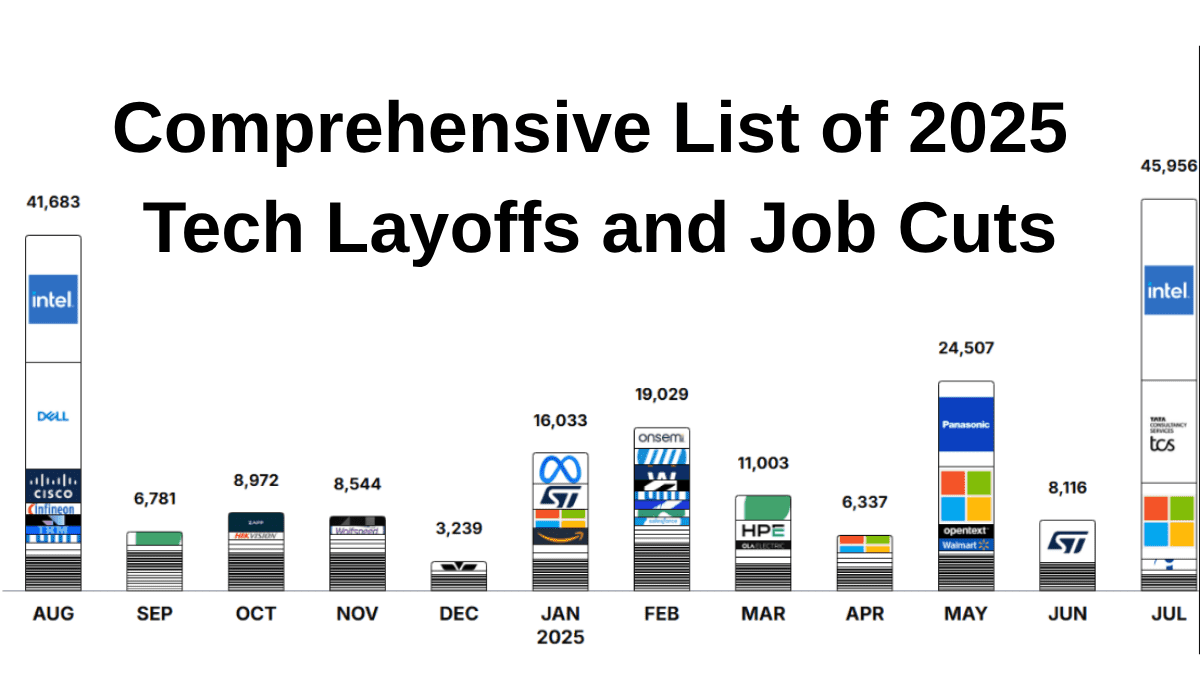
Job market dynamics reflect these shifts. Competition for open positions intensifies as displaced employees search for roles. Salary growth slows in competitive labor markets with elevated supply. Conversely, specific skill shortages (AI expertise, cloud architecture, security engineering) see continued premium compensation. The job market increasingly resembles a skills-based market where your capability set determines opportunity, not your company tenure or credentials.
Long-Term Industry Outlook
Current trends suggest tech industry employment stabilization at lower levels than pandemic peaks. The industry expanded dramatically during 2020-2021 when every company believed remote work and software dominance meant unlimited growth. As growth normalized, companies discovered they'd over-hired. The current reset brings employment to sustainable levels. This normalization, while painful for displaced workers, benefits the industry long-term by right-sizing cost structures.
For Indian professionals evaluating tech careers, recognize that stability comes from building specialized expertise and maintaining network connections, not from corporate tenure. The most secure professionals are those consistently building valuable skills in-demand by multiple companies. That adaptability, combined with India's cost and quality advantages in software development, ensures continued opportunity for talented professionals even through industry cycles.
About the Author

Anny
Premium daily newsletter for the Indian tech community | Covering AI, startups, and business innovation | Built by technologies, for technologists.
Related Stories

AI Is Using Your Job. But It's Not Taking It — Microsoft's Global Report Changes the Narrative

13 Balls. 8 Sixes. Joint-Fastest Fifty Ever. Meet Urvil Patel — CSK's New Weapon
