Musk vs. Altman Trial Week 1: What Happened
The most-watched AI lawsuit in history completed its first week of testimony in Oakland, California. Elon Musk and Sam Altman were feet apart in a federal courtroom as lawyers clashed over OpenAI's founding mission, its $500B+ valuation, and $130B in alleged "wrongful gains." Judge Gonzalez Rogers is expected to deliver a ruling by mid-May.
DailyByteNews
Staff Writer
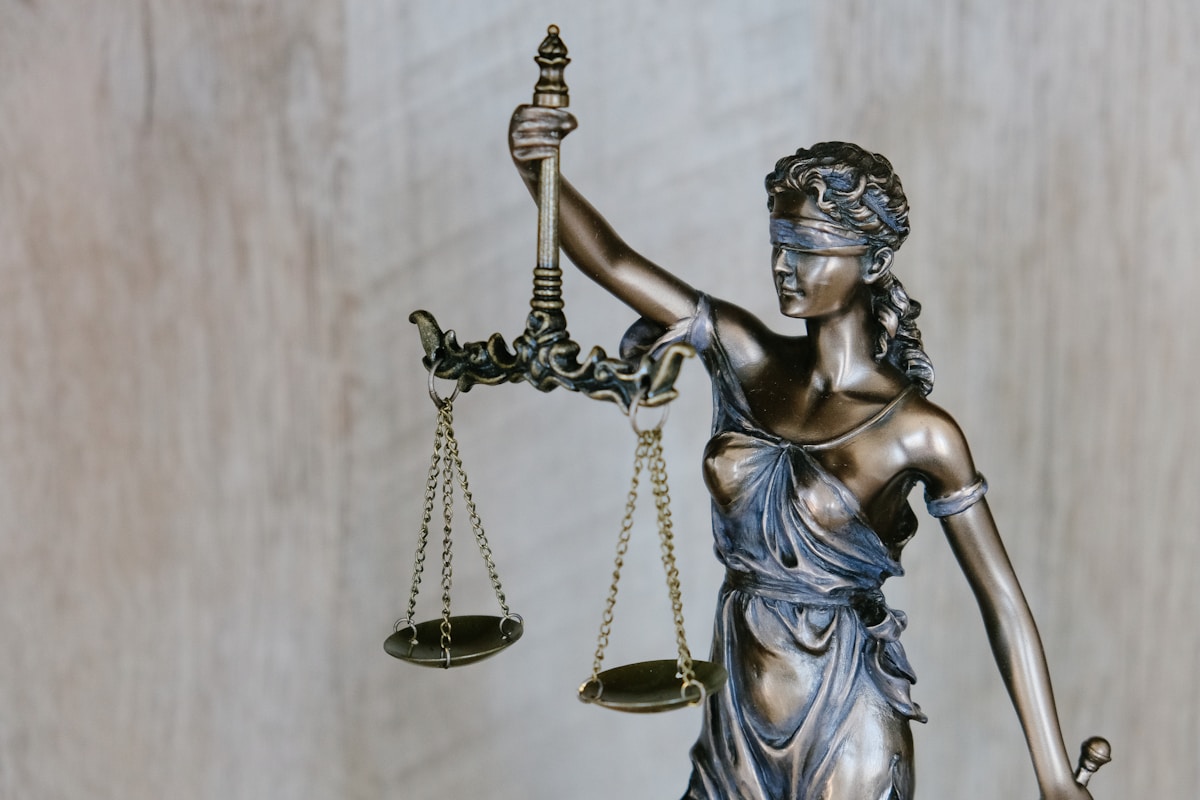
The Musk v. Altman trial is being heard at the federal courthouse in Oakland, California. Judge Gonzalez Rogers is expected to deliver her ruling by mid-May 2026.
The federal courthouse in Oakland, California became the undisputed epicenter of the global AI industry this week as Elon Musk's lawsuit against OpenAI, CEO Sam Altman, and co-founder Greg Brockman concluded its opening phase. The trial — entering its fifth day — features two fiercely competing narratives of OpenAI's origins: Musk alleges the company was "ripped from its promise of altruism" and that Altman systematically deceived him over the lab's nonprofit charter; Altman's defense team characterizes the entire suit as sour grapes from a competitor who quit in 2018 and then watched OpenAI succeed spectacularly without him.
The trial began on April 28 with a nine-person advisory jury empanelled by Judge Yvonne Gonzalez Rogers of the U.S. District Court for the Northern District of California. Musk took the stand for multiple days and repeatedly clashed with OpenAI's lead attorney William Savitt — at one point accusing him of asking "definitionally complex" questions and stating that Savitt's claim of simplicity was "a lie." The judge intervened multiple times, reminding the courtroom that Musk is not a lawyer and has not studied evidence law. Musk quipped he had "technically" completed "Law 101," drawing laughter from press and gallery alike.
"We are here because Mr. Musk didn't get his way at OpenAI. He quit, saying they would fail for sure. But my clients had the nerve to go on and succeed without him. Mr. Musk may not like that, but it's no basis for a lawsuit." — William Savitt, Lead Counsel for OpenAI
$130 Billion and the Future of AI Governance
Musk is seeking approximately $130 billion in disgorgement of alleged wrongful gains, along with the forced removal of Altman and Brockman from their leadership roles at OpenAI. His legal team has since indicated the funds should be redirected back to the original OpenAI charitable mission rather than paid to Musk personally. Two claims survive from the original 26: breach of charitable trust and unjust enrichment. At the heart of the case is OpenAI's 2024–2026 restructuring from a nonprofit into a public benefit corporation with a capped-profit subsidiary — a transformation that also reduced Microsoft's equity stake from a reported 49% economic interest to approximately 27% in exchange for extended IP licensing rights through 2032.

A significant development midweek involved OpenAI's attorneys arguing to exclude testimony from Jared Birchall, Musk's longtime money manager, over questions about the reliability of his claims regarding Altman's alleged dual-side negotiation of the restructuring deal. Judge Gonzalez Rogers said she would rule on the matter in coming days. Separately, OpenAI lawyers presented messages at trial claiming that Shivon Zilis — a venture capitalist, longtime Musk associate, and mother of four of his children — acted as a covert liaison between Musk and OpenAI leadership in the period preceding the lawsuit.
"It is not OK to steal a charity. Full stop." — Elon Musk, on the witness stand, April 28, 2026
What Happens Next — and Why India Should Watch Closely
Judge Gonzalez Rogers has divided proceedings into two phases: a liability phase — currently underway — to determine if wrongdoing occurred, and a potential remedies phase where consequences are decided. The nine-person jury's findings are advisory only; the judge retains final authority. A ruling is expected by mid-May 2026. Should Musk prevail, OpenAI's planned IPO — which would value the company at over $500 billion — could face serious legal obstacles, creating ripple effects for global investors including SoftBank, which has committed over $30 billion to OpenAI. For India's AI ecosystem, the stakes are concrete: over a million Indian ChatGPT users and hundreds of Indian enterprises and startups built on the OpenAI API could face pricing changes, API restructuring, or supply disruptions if a court-ordered reorganization materially alters OpenAI's commercial operations. The verdict — expected within two weeks — is the most consequential AI legal ruling in history.
About the Author

DailyByteNews
Covering the latest in AI, technology, and business — built for the modern Indian tech reader.
Related Stories
AI Is Using Your Job. But It's Not Taking It — Microsoft's Global Report Changes the Narrative
13 Balls. 8 Sixes. Joint-Fastest Fifty Ever. Meet Urvil Patel — CSK's New Weapon
