One Year of Operation Sindoor — The Night India Changed Forever
One year ago tonight, India launched Operation Sindoor — 23 minutes of precision missile strikes that changed India's relationship with Pakistan, with terrorism, and with itself. This is the complete story of what happened and what it means today.

Aman Yadav
Staff Writer
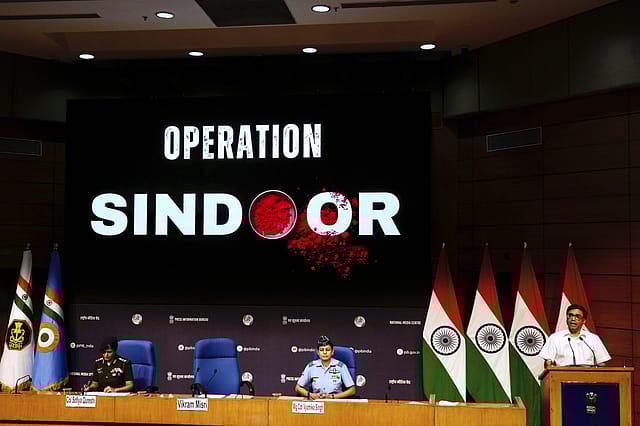
One year ago on May 7, 2025, Indian Air Force jets launched Operation Sindoor — 23 minutes of precision strikes that changed India's security doctrine forever.
It began with a terror attack that broke India's heart.
On April 22, 2025, 26 civilians — tourists, families on vacation in the meadows of Pahalgam, Jammu & Kashmir — were shot dead by militants with documented links to Pakistan-based terror groups. It was the deadliest terrorist attack on Indian civilians in years. The images were unbearable. The grief was national.
India did not respond immediately. For 15 days, the world watched and waited. Would India absorb the attack and move on, as it had so many times before? Would there be another round of diplomatic statements, cross-border condemnations, and quiet inaction? Or had something fundamentally changed?
On the night of May 6/7, 2025 — exactly one year ago tonight — India answered that question permanently.
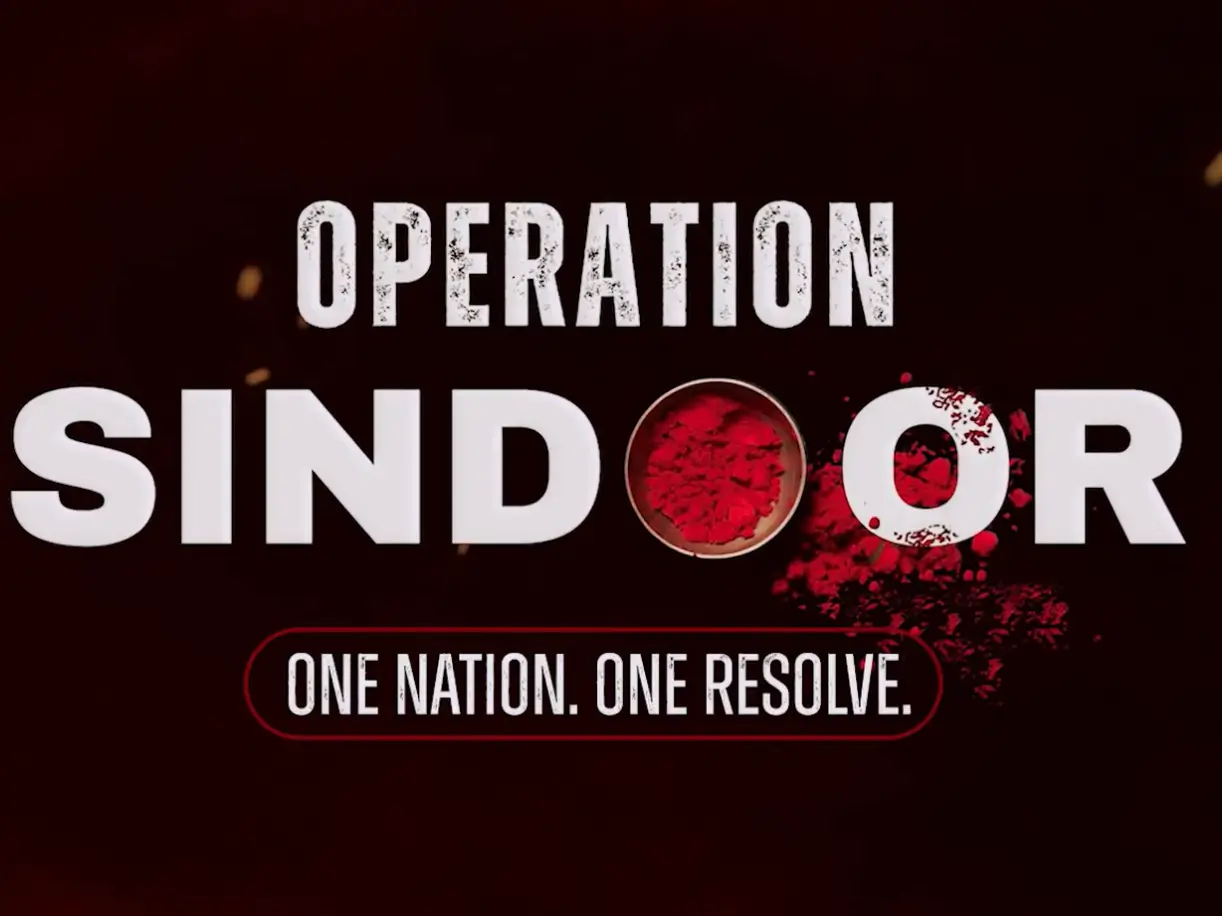
Indian Air Force Rafale jets flew precision strike missions into Pakistani territory during Operation Sindoor — the most significant Indian military action since the 1971 war.
23 Minutes That Rewrote History
Operation Sindoor lasted exactly 23 minutes. In that time, IAF jets — primarily Rafales repositioned from across India's air bases at Hasimara, Gwalior, Ambala, Srinagar, and Nal in Rajasthan — struck what India described as "terrorist infrastructure" inside Pakistani territory.
The targets included the headquarters of Jaish-e-Mohammed at Jamia Masjid Subhan Allah in Bahawalpur, and camps belonging to Lashkar-e-Taiba. India was surgical, precise, and deliberate about what it did and did not strike. No Pakistani military installations were targeted — the message was directed exclusively at the terror infrastructure that had sheltered the Pahalgam attackers.
Defence Minister Rajnath Singh confirmed at least 100 militants were killed in the strikes. Jaish-e-Mohammed chief Maulana Masood Azhar acknowledged that 10 members of his family and four close aides were killed when India's missiles hit his organisation's headquarters.
"Operation Sindoor was not a war. It was a message. India has the capability, the will, and the determination to strike at terrorism wherever it hides." — Indian Government statement, May 7, 2025
The four days that followed were the most intense military exchange between India and Pakistan in nearly three decades. Pakistan retaliated. There were drone strikes, artillery exchanges along the Line of Control, and aerial engagements. India claimed its air defenses neutralised Pakistani responses. Pakistan claimed it shot down several Indian jets, including Rafales. Both sides fought a fierce information war alongside the actual one.
The World Watched, America Intervened
US President Donald Trump, Vice President JD Vance, and Secretary of State Marco Rubio worked frantically to pull both sides back from the brink. On May 10, 2025 — four days after Operation Sindoor began — the Director General of Military Operations of the Indian Army met with his Pakistani counterpart. A ceasefire was agreed. The guns went quiet.
Trump would spend the rest of 2025 — and into his 2026 State of the Union address — claiming credit for preventing a nuclear war. India would spend the same period insisting the de-escalation was strictly bilateral, rejecting any suggestion of American mediation. The disagreement became a source of friction in the US-India relationship that persists to this day.

One year on, India observes the anniversary of Operation Sindoor with quiet national reflection — a moment that changed India's security doctrine permanently.
What Changed — And What Didn't
One year later, the honest assessment is: a lot changed, and some things stubbornly didn't.
What changed: India's security doctrine is fundamentally different. Before Sindoor, India absorbed cross-border terrorism through surgical strikes, diplomatic protests, and restrained retaliation. After Sindoor, the implicit message is that India will strike Pakistani territory directly in response to terror attacks traced to Pakistani groups — without warning, without waiting for international permission. That is a permanent shift in the regional security calculus.
What didn't change: Pakistan's territorial integrity is intact. The terror infrastructure was damaged but not destroyed. Relations between the two countries remain frozen — no cricket, no trade, no dialogue. The Indus Waters Treaty remains suspended. The Line of Control is still where it was. And the fundamental dynamics that produce cross-border terrorism — Pakistani state complicity, the Kashmir dispute, the mutual nuclear deterrent — are all unchanged.
One Year Later — Where Things Stand
Today, May 6, 2026, the US-Iran war in the Middle East has created a new set of pressures. The Strait of Hormuz — through which India's oil supplies flow — is partially blocked. Jet fuel prices are elevated. India's economy is absorbing external shocks it didn't anticipate. And the diplomatic handshake in Dhaka in December 2025 between India's Foreign Minister Jaishankar and Pakistan's National Assembly Speaker has given the faintest hint that both countries might, someday, restart minimal engagement.
But the 26 families who lost their loved ones in Pahalgam on April 22, 2025, are one year older in their grief. For them, Operation Sindoor was not a geopolitical milestone or a doctrine shift. It was justice — imperfect, incomplete, but delivered.
India launched missiles in the dark of night a year ago. The world held its breath. And something shifted permanently in how India sees itself — and how it is seen.
One year of Operation Sindoor. The wound that started it still hasn't fully healed. But India made clear it would never absorb that wound quietly again.
About the Author

Aman Yadav
Covering the latest in AI, technology, and business — built for the modern Indian tech reader.
Related Stories
AI Is Using Your Job. But It's Not Taking It — Microsoft's Global Report Changes the Narrative
13 Balls. 8 Sixes. Joint-Fastest Fifty Ever. Meet Urvil Patel — CSK's New Weapon
