Robotics Just Achieved What Seemed Impossible
A robotics startup just built a model that achieves 99% success rates on complex tasks. The implications for manufacturing, logistics, and labor are staggering.

DailyByteNews
Staff Writer
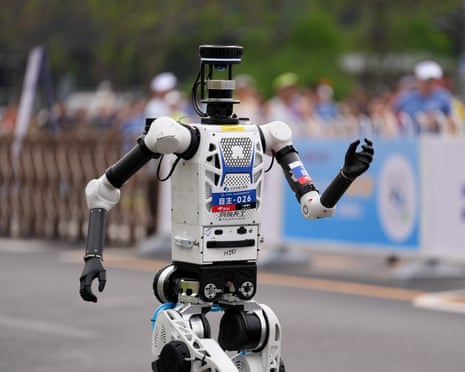
Generalist AI's breakthrough in dexterous robotics represents the inflection point where robots transition from scripted machines to adaptable, learning-based systems.
The Success Rate That Changes Everything
Generalist AI—a startup most people haven't heard of—just announced something quietly revolutionary: their GEN-1 robotics model achieves 99% success rates on certain tasks, compared to ~64% for the previous generation. But here's the stunning part: it learns from one hour of robot-specific data to adapt to entirely new tasks.
For context: industrial robots have been domain-specific, scripted machines for decades. Teach them one task perfectly, and that's their job forever. But teach a human one task, and they can apply that learning to solve infinite variations. GEN-1 bridges that gap.
The robotics industry has been waiting for this inflection point since the 1970s. We're finally here.
The Physical AI Revolution That's Actually Happening
Generalist AI didn't build a better robot. They built a better AI system that enables robots to understand natural language, reason about physical tasks, and adapt to new environments. That's the distinction that matters. The robotics hardware hasn't changed dramatically. The software abstraction layer—the intelligence—is the breakthrough.
NVIDIA released open-source robotics models (Isaac GR00T) that enable natural language understanding for complex multi-step tasks. The Newton 1.0 physics engine provides accurate collision detection and manipulation simulation. The infrastructure ecosystem is suddenly abundant with tools that didn't exist even 12 months ago.
What was technically impossible in 2024 is commodity in 2026. That's the pace of AI infrastructure advancement.
What This Means for You
Manufacturing and logistics in India are about to undergo radical transformation. Human labor remains cheap relative to advanced markets, which historically meant less automation investment. But when robots become intelligent, adaptable, and require minimal training data to deploy, the economics flip. Suddenly, automation becomes profitable even in lower-cost labor markets.
The opportunity for India: robotics integration services, AI training data generation, and specialized applications for Indian manufacturing processes. The companies that understand how to adapt these tools to India's specific context—different hardware availability, different labor dynamics, different regulatory environment—will capture value as automation accelerates.
"The robot that can learn is more valuable than the robot that never fails—because learning enables unlimited applications."
The Manufacturing Implication That Looms
When robotics becomes intelligent and adaptable, entire categories of human labor become economically replaceable. That's not an indictment of AI. That's a statement of fact. But it's also an opportunity: workers displaced from routine manufacturing can transition to higher-value work—maintaining robots, programming systems, troubleshooting complex processes. The transition might be painful, but it's economically inevitable.
India's manufacturing sector is positioned at an interesting inflection point. High-volume, moderate-complexity manufacturing—textiles, electronics assembly, small goods—these are areas where intelligent robotics provide immediate ROI. Companies that invest in these systems now will have cost and productivity advantages over competitors for the next decade.
About the Author

DailyByteNews
Covering the latest in AI, technology, and business — built for the modern Indian tech reader.
Related Stories

AI Is Using Your Job. But It's Not Taking It — Microsoft's Global Report Changes the Narrative

13 Balls. 8 Sixes. Joint-Fastest Fifty Ever. Meet Urvil Patel — CSK's New Weapon
